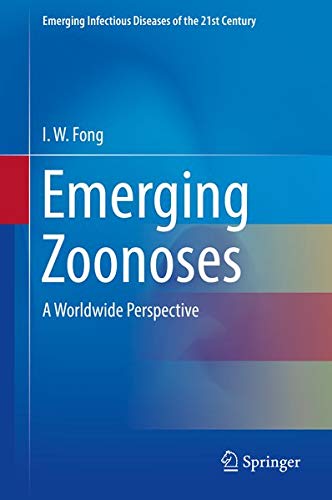
Omslagsbild från Amazon
Bild från Amazon.com

Emerging Zoonoses [electronic resource] : A Worldwide Perspective / by I. W. Fong.

Av: Medverkande: Materialtyp: TextSerie: Emerging Infectious Diseases of the 21st CenturyUtgivningsuppgift: Cham : Springer International Publishing : Imprint: Springer, 2017Beskrivning: XV, 250 p. 10 illus., 9 illus. in color. online resourceInnehållstyp:
  • text
Medietyp:
  • computer
Bärartyp:
  • online resource
ISBN:
  • 9783319508900
Ämnen: Fler format: Printed edition:: Ingen titelDDK-klassifikation:
  • 616.9 23
Library of Congress (LC) klassifikationskod:
  • RC109-216
Onlineresurser:
Innehåll:
1.Pandemic zoonoses from the Middle-Ages to the 20th Century -- 2.Animals and mechanisms of disease transmission -- 3.Swine and avian influenza outbreaks in recent times --  4.Emerging animal coronaviruses: First SARS and now MERS -- 5.Emergence of new tickborne infections -- 6.Chikungunya virus and Zika virus expansion: an imitation of Dengue virus -- 7.Ebola and Marburg: out of Africa -- 8.Hepatitis E: a zoonosis -- 9.Zoonotic malaria: Plasmodium knowlesi -- 10.Zoonotic streptococci: A focus on Streptocccus suis -- 11.New and emerging parasitic zoonoses.
I: Springer eBooksSammanfattning: The book begins with a review of zoonotic pandemics of the past: the “Black Death” or bubonic plague of the Middle Ages, the Spanish Influenza pandemic (derived from avian influenza) of the early 20th century, to the more modern pandemic of AIDS/HIV infection, which originated in Africa from primates. However, the majority of chapters focus on more recent zoonoses, which have been recognized since the late 20th century to the present: SARS and MERS coronaviruses New avian influenza viruses The tick-borne Henan fever virus from China The tick-borne Heartland virus from the United States Recently recognized bacterial pathogens, such as Streptococcus suis from pigs. In addition, reemergence of established zoonoses that have expanded their niche are reviewed, such as the spread of Zika virus and Chikungunya virus to the Western Hemisphere, and the emergence and spread of Ebola virus infection in Africa. A chapter is also devoted to an overview of the mechanisms and various types of animals involved in the transmission of diseases to humans, and the potential means of control and prevention. Many endemic and sporadic diseases are still transmitted by animals, through either direct or indirect contact, and zoonoses are estimated to account for about 75% of all new and emerging infectious diseases. It is predicted by public health experts that the next major pandemic of infectious disease will be of animal origin, making Emerging Zoonoses: A Worldwide Perspective a crucial resource to all health care specialists by providing them with much needed information on these zoonotic diseases.
Taggar från det här biblioteket: Den aktuella titeln har inga taggar från det här biblioteket. Logga in för att lägga till taggar.
Betyg
    Medelbetyg: 0.0 (0 röster)
Inga fysiska exemplar för denna post

1.Pandemic zoonoses from the Middle-Ages to the 20th Century -- 2.Animals and mechanisms of disease transmission -- 3.Swine and avian influenza outbreaks in recent times --  4.Emerging animal coronaviruses: First SARS and now MERS -- 5.Emergence of new tickborne infections -- 6.Chikungunya virus and Zika virus expansion: an imitation of Dengue virus -- 7.Ebola and Marburg: out of Africa -- 8.Hepatitis E: a zoonosis -- 9.Zoonotic malaria: Plasmodium knowlesi -- 10.Zoonotic streptococci: A focus on Streptocccus suis -- 11.New and emerging parasitic zoonoses.

The book begins with a review of zoonotic pandemics of the past: the “Black Death” or bubonic plague of the Middle Ages, the Spanish Influenza pandemic (derived from avian influenza) of the early 20th century, to the more modern pandemic of AIDS/HIV infection, which originated in Africa from primates. However, the majority of chapters focus on more recent zoonoses, which have been recognized since the late 20th century to the present: SARS and MERS coronaviruses New avian influenza viruses The tick-borne Henan fever virus from China The tick-borne Heartland virus from the United States Recently recognized bacterial pathogens, such as Streptococcus suis from pigs. In addition, reemergence of established zoonoses that have expanded their niche are reviewed, such as the spread of Zika virus and Chikungunya virus to the Western Hemisphere, and the emergence and spread of Ebola virus infection in Africa. A chapter is also devoted to an overview of the mechanisms and various types of animals involved in the transmission of diseases to humans, and the potential means of control and prevention. Many endemic and sporadic diseases are still transmitted by animals, through either direct or indirect contact, and zoonoses are estimated to account for about 75% of all new and emerging infectious diseases. It is predicted by public health experts that the next major pandemic of infectious disease will be of animal origin, making Emerging Zoonoses: A Worldwide Perspective a crucial resource to all health care specialists by providing them with much needed information on these zoonotic diseases.

Det finns inga kommentarer om exemplaret.

för att skicka en kommentar.
Medicinska biblioteket, Karlskoga lasarett
Måndag och onsdag: 10.00-14.30, Lunchstängt 11.30-12.00.
Fredagar: 10.00-12.00.

Madelene Ribbing, bibliotekarie
Lena Mileraux, biblioteksassistent/administratör
0586-664 49
medbibl.kgalas@regionorebrolan.se


Medicinska biblioteket, Lindesbergs lasarett
Dörren till bibliotket är upplåst mellan 07-16:00 på vardagar.
Dörren i hisshallen är öppen måndag - tosdag 7.00 - 15.00. Fredagar stängt.

Bibliotekets bemanning:
Mån: självbetjäning
Tis, ons och tors: 10-15
Fre: självbetjäning

Madelene Ribbing, bibliotekarie
Telefon: 0581-853 11, 072-14 77 552
medbibl.lbglas@regionorebrolan.se