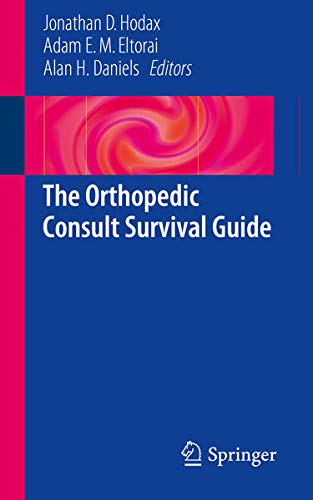
Omslagsbild från Amazon
Bild från Amazon.com

The Orthopedic Consult Survival Guide [electronic resource] / edited by Jonathan D. Hodax, Adam E. M. Eltorai, Alan H. Daniels.

Medverkande: Materialtyp: TextUtgivningsuppgift: Cham : Springer International Publishing : Imprint: Springer, 2017Beskrivning: XIX, 298 p. 63 illus., 14 illus. in color. online resourceInnehållstyp:
  • text
Medietyp:
  • computer
Bärartyp:
  • online resource
ISBN:
  • 9783319523477
Ämnen: Fler format: Printed edition:: Ingen titelDDK-klassifikation:
  • 616.7 23
Library of Congress (LC) klassifikationskod:
  • RD701-811
Onlineresurser:
Innehåll:
Foreword -- Preface -- Acknowledgements -- Part 1: Special Considerations in Orthopedics -- 1. The Polytrauma Patient -- 2. Open Fractures -- 3. High energy trauma -- 4.Penetrating trauma -- 5. Never-Miss Conditions -- Part 2: Skills and Techniques for Diagnosing and Treating Musculoskeletal Injuries -- 6. Splinting and Casting Techniques -- 7. Joint Aspiration and Injection -- 8. Hematoma Block -- 9. Basic Fracture Reduction Principles -- 10. Traction Pin Placement -- Part 3: Upper Extremity Injuries -- 11. Soft Tissue Injuries of the Hand -- 12. Adult Digital and Metacarpal Injuries -- 13. Pediatric Digital and Metacarpal Injuries -- 14. Adult Carpal Injuries -- 15. Adult Distal Radius Fractures -- 16. Pediatric Wrist and Scaphoid Fractures -- 17. Adult Forearm Fractures -- 18. Pediatric Forearm Fractures -- 19. Elbow Dislocations -- 20. Pediatric Elbow Fractures -- 21. Humerus Fractures -- 22. Glenohumeral Dislocation -- 23. Pediatric Shoulder Injures: Proximal Humerus Fractures and Clavicle Fractures -- 24. Clavicle Fractures and Dislocations -- Part 4: Axial Skeletal Injuries -- 25. Cervical Spine Trauma -- 26. Cervical Stenosis and Central Cord Syndrome -- 27. Thoracolumbar Spine Trauma -- 28. Lumbar Stenosis and Cauda Equina Syndrome -- 29. Spinal Epidural Abscess -- 30. Sacral Fractures -- 31. Pelvis Fractures (AP Mechanism) -- 32. Pelvic Fractures (Lateral Compression Mechanism) -- 33. Vertical Shear Pelvic Injuries -- 34. Pubic Rami Fractures -- 35. Acetabular Fractures -- Part 5: Lower extremity injuries -- 36. Hip Dislocations -- 37. Femoral Head Fractures in the Geriatric Patient -- 38. Femoral Head Fractures in the Young Patient -- 39. Intertrochanteric, Basicervical, and Femoral Neck Fracture in the Geriatric Patient -- 40. Subtrochanteric Femur Fractures -- 41. Adult Femoral Shaft Fractures -- 42. Pediatric Femur Fractures -- 43. Distal Femur Fractures -- 44. Patellar Dislocation -- 45. Ligament Injuries of the Knee -- 46. Patellar Fractures -- 47. Tibial Plateau Fractures -- 48. Adult Tibial Shaft Fractures -- 49. Pediatric Tibial Shaft Fractures -- 50. Pilon (Axial Load) Ankle Fractures -- 51. Rotational Ankle Fractures -- 52. Pediatric Ankle Fractures -- 53. The Hindfoot -- 54. Midfoot Injuries -- 55. Injuries of the Forefoot.
I: Springer eBooksSammanfattning: This is a quick-reference resource covering the most common acute orthopedic injuries. Including bulleted text and easy-to-follow algorithms, protocols, and images, this “pocket consultant” provides the most up-to-date information when you need it most. Organized anatomically for fast reference, each chapter is broken down into the most common and most serious injuries with tips on how to evaluate and treat adult and pediatric patients. Each injury pattern discussed includes a brief description covering what to ask, what to bring, what to request, what to test, what to look for, and how to further evaluate. The contributing authors are senior orthopedic surgery residents at a major Level-1 Trauma Center who have experience managing a high volume of orthopedic injuries and who have trained many young residents. Covering all aspects of acute care, The Orthopedic Consult Survival Guide is an indispensable tool for medical students, residents, fellows, attendings , and affiliated providers in orthopedic surgery, emergency medicine, and surgery caring for orthopedic patients in emergency rooms, urgent care centers, and primary practice settings.
Taggar från det här biblioteket: Den aktuella titeln har inga taggar från det här biblioteket. Logga in för att lägga till taggar.
Betyg
    Medelbetyg: 0.0 (0 röster)
Inga fysiska exemplar för denna post

Foreword -- Preface -- Acknowledgements -- Part 1: Special Considerations in Orthopedics -- 1. The Polytrauma Patient -- 2. Open Fractures -- 3. High energy trauma -- 4.Penetrating trauma -- 5. Never-Miss Conditions -- Part 2: Skills and Techniques for Diagnosing and Treating Musculoskeletal Injuries -- 6. Splinting and Casting Techniques -- 7. Joint Aspiration and Injection -- 8. Hematoma Block -- 9. Basic Fracture Reduction Principles -- 10. Traction Pin Placement -- Part 3: Upper Extremity Injuries -- 11. Soft Tissue Injuries of the Hand -- 12. Adult Digital and Metacarpal Injuries -- 13. Pediatric Digital and Metacarpal Injuries -- 14. Adult Carpal Injuries -- 15. Adult Distal Radius Fractures -- 16. Pediatric Wrist and Scaphoid Fractures -- 17. Adult Forearm Fractures -- 18. Pediatric Forearm Fractures -- 19. Elbow Dislocations -- 20. Pediatric Elbow Fractures -- 21. Humerus Fractures -- 22. Glenohumeral Dislocation -- 23. Pediatric Shoulder Injures: Proximal Humerus Fractures and Clavicle Fractures -- 24. Clavicle Fractures and Dislocations -- Part 4: Axial Skeletal Injuries -- 25. Cervical Spine Trauma -- 26. Cervical Stenosis and Central Cord Syndrome -- 27. Thoracolumbar Spine Trauma -- 28. Lumbar Stenosis and Cauda Equina Syndrome -- 29. Spinal Epidural Abscess -- 30. Sacral Fractures -- 31. Pelvis Fractures (AP Mechanism) -- 32. Pelvic Fractures (Lateral Compression Mechanism) -- 33. Vertical Shear Pelvic Injuries -- 34. Pubic Rami Fractures -- 35. Acetabular Fractures -- Part 5: Lower extremity injuries -- 36. Hip Dislocations -- 37. Femoral Head Fractures in the Geriatric Patient -- 38. Femoral Head Fractures in the Young Patient -- 39. Intertrochanteric, Basicervical, and Femoral Neck Fracture in the Geriatric Patient -- 40. Subtrochanteric Femur Fractures -- 41. Adult Femoral Shaft Fractures -- 42. Pediatric Femur Fractures -- 43. Distal Femur Fractures -- 44. Patellar Dislocation -- 45. Ligament Injuries of the Knee -- 46. Patellar Fractures -- 47. Tibial Plateau Fractures -- 48. Adult Tibial Shaft Fractures -- 49. Pediatric Tibial Shaft Fractures -- 50. Pilon (Axial Load) Ankle Fractures -- 51. Rotational Ankle Fractures -- 52. Pediatric Ankle Fractures -- 53. The Hindfoot -- 54. Midfoot Injuries -- 55. Injuries of the Forefoot.

This is a quick-reference resource covering the most common acute orthopedic injuries. Including bulleted text and easy-to-follow algorithms, protocols, and images, this “pocket consultant” provides the most up-to-date information when you need it most. Organized anatomically for fast reference, each chapter is broken down into the most common and most serious injuries with tips on how to evaluate and treat adult and pediatric patients. Each injury pattern discussed includes a brief description covering what to ask, what to bring, what to request, what to test, what to look for, and how to further evaluate. The contributing authors are senior orthopedic surgery residents at a major Level-1 Trauma Center who have experience managing a high volume of orthopedic injuries and who have trained many young residents. Covering all aspects of acute care, The Orthopedic Consult Survival Guide is an indispensable tool for medical students, residents, fellows, attendings , and affiliated providers in orthopedic surgery, emergency medicine, and surgery caring for orthopedic patients in emergency rooms, urgent care centers, and primary practice settings.

Det finns inga kommentarer om exemplaret.

för att skicka en kommentar.
Medicinska biblioteket, Karlskoga lasarett
Måndag och onsdag: 10.00-14.30, Lunchstängt 11.30-12.00.
Fredagar: 10.00-12.00.

Madelene Ribbing, bibliotekarie
Lena Mileraux, biblioteksassistent/administratör
0586-664 49
medbibl.kgalas@regionorebrolan.se


Medicinska biblioteket, Lindesbergs lasarett
Dörren till bibliotket är upplåst mellan 07-16:00 på vardagar.
Dörren i hisshallen är öppen måndag - tosdag 7.00 - 15.00. Fredagar stängt.

Bibliotekets bemanning:
Mån: självbetjäning
Tis, ons och tors: 10-15
Fre: självbetjäning

Madelene Ribbing, bibliotekarie
Telefon: 0581-853 11, 072-14 77 552
medbibl.lbglas@regionorebrolan.se